
Efficient decoding is dependent upon accuracy and automaticity in pairing letters to the sounds they represent. Take a moment to read about an effective approach that accelerates the acquisition of this foundational knowledge.
The alphabetic principle refers to the insight that there are systematic and predictable relationships between written letters and spoken sounds (Armbruster, 2010).
Did you know that accuracy and automaticity in pairing letters to the sounds they represent is a prerequisite for decoding and spelling? How have you been teaching these correspondences?
Many popular phonics programs use a keyword and illustration to support first-sound pairing, such as showing a frog image alongside the letter ‘f’ or presenting a zebra image below the letter ‘z.’ While these methods begin to facilitate grapho-phoneme connections, embedded mnemonics have proven to be more beneficial for early readers in accelerating the rate at which these correspondences are acquired (Ehri et al., 1984; Schmidman & Ehri, 2010).
Three characteristics of effective picture-embedded mnemonics:
- The name or label of the object is likely known or easily taught to students
- The initial phoneme in the object name represents the most common sound of the letter
- The shape of the object conforms to the natural shape of the letter
After initial exposure to a correspondence through an instructional script, it is important to quickly remove the picture mnemonic and present students with a bare letter, so they generalize the skill. The ultimate goal is that students see a bare letter and produce the sound it represents. If students struggle to remember the letter sound, however, they can be prompted by the picture mnemonic to recall the initial sound of that picture, which again is the target letter sound.
In collaboration with Dr. Linnea Ehri, the AIM Institute for Learning & Research created a set of embedded picture mnemonics and instructional routines to support letter-sound associations. Look for the AIM Animated Alphabet cards in our next Steps to Literacy learning module entitled, Growing Proficient Readers: Dr. Ehri’s Phases of Development.
As soon as students master one vowel correspondence and two or more consonants, they can begin to read vowel-consonant or consonant-vowel-consonant words. Doing so ensures that students immediately begin to read words with learned sounds, even if the words formed are nonsense words!
Example Using AIM Animated Alphabet Card Images:
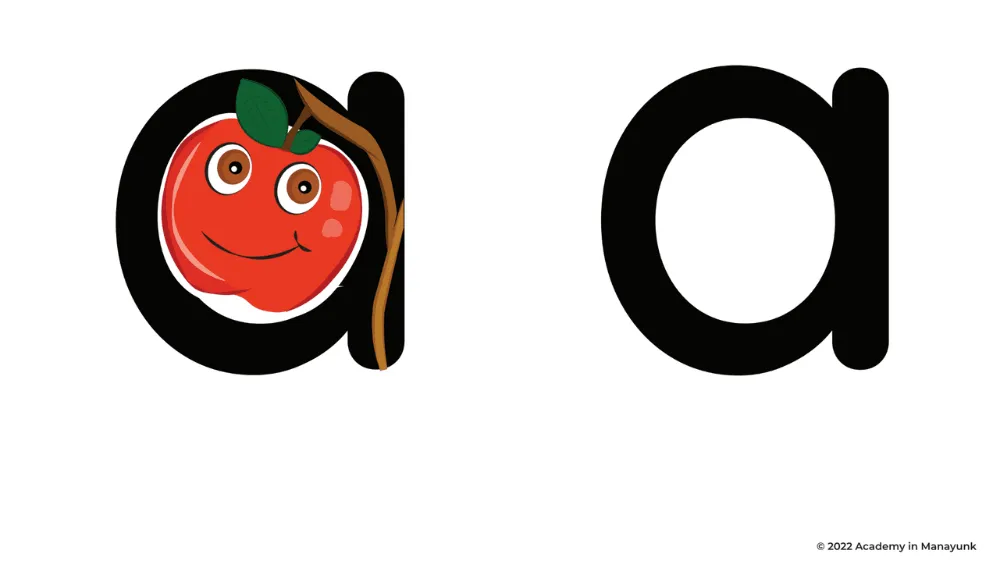 Introduce and practice ‘a’ with instructional script.
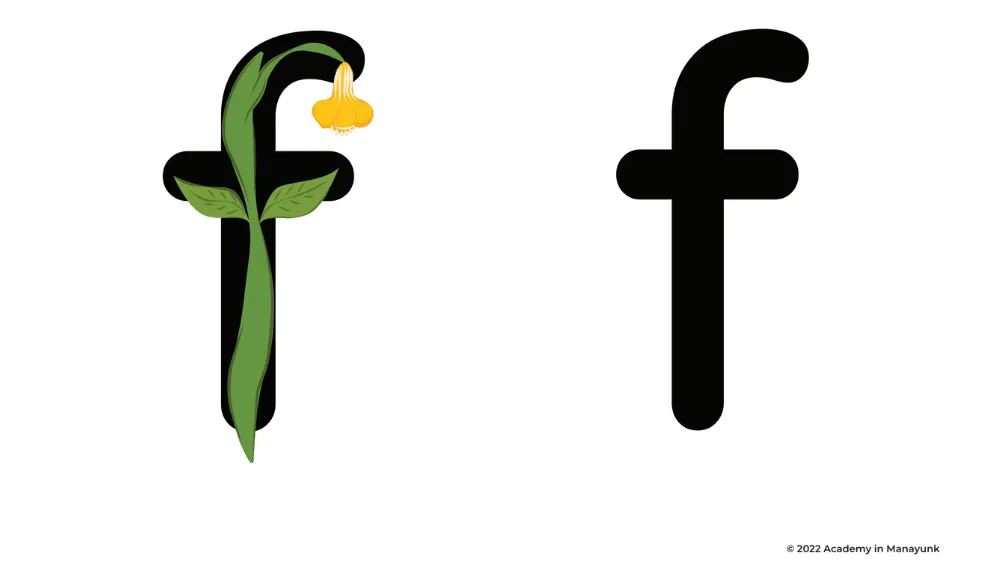 Introduce and practice ‘f’ with instructional script.
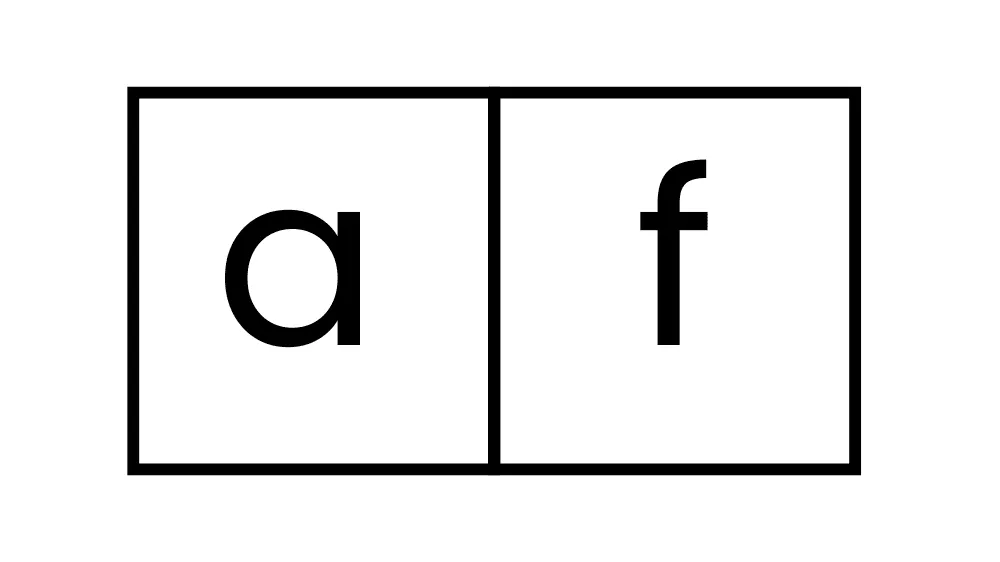 Build nonsense word ‘af’ to practice blending through phonic decoding.
Armbruster, B. B. (2010). Put reading first: The research building blocks for teaching children to read: Kindergarten through grade 3. Diane Publishing Company.
Ehri, L. C., Deffner, N. D., & Wilce, L. S. (1984). Pictorial mnemonics for phonics. Journal of Educational Psychology, 76(5), 880–893. https://doi.org/10.1037/0022-0663.76.5.880
Shmidman, A., & Ehri, L. (2010) Embedded picture mnemonics to learn letters. Scientific Studies of Reading, 14:2, 159-182, DOI: 10.1080/10888430903117492