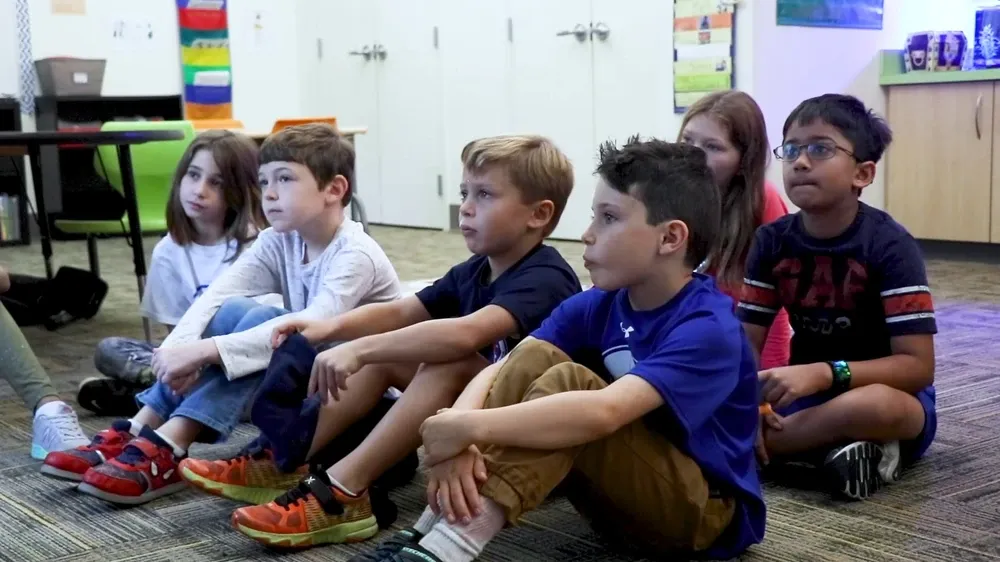
Reading at home is one of the simplest ways to boost a child’s confidence, independence, and overall achievement. Just 15-30 minutes a night compounds into stronger word recognition, better comprehension, and fosters a love for reading. This post is written for parents, teachers, and homeschool families with practical steps you can use tonight.
Start with a Simple Routine
A predictable routine helps children settle in and focus.
- Pick a consistent time. After snack, before bed, or after sports. Whatever sticks.
- Choose the book together. If you’re homeschooling, reach for decodable texts or high-interest books. Classroom teachers can suggest 1-2 options by level to parents.
- Preview the book. Skim the summary, peek at pictures, and talk about when/where the story takes place. Is there anything you think needs to be shared before reading?
- Create a cozy spot. Good lighting, minimal distractions, and a comfortable seat.
- Talk every day. Ask open-ended questions about stories and life. Conversation builds vocabulary and comprehension.
Why it matters: Research from the National Reading Panel (2000) shows that regular reading outside of school is one of the strongest predictors of academic success. Even in the early grades, just a little bit of consistent practice at home can make a big difference in how confident and capable children feel as readers.
What Is Reading Fluency & Why Does It Matter?
Fluency is reading with accuracy, at an appropriate rate, and with expression. When reading sounds smooth and conversational, the brain can focus on meaning. If most energy goes into sounding out every word, comprehension can be compromised. Fluency grows with consistent and effective practice.
The Oral Reading Fluency Rubric
Invite your child to reflect on how reading sounds and feels using this quick rubric adapted from Dr. Tim Rasinski's Multidimensional Fluency Rubric.
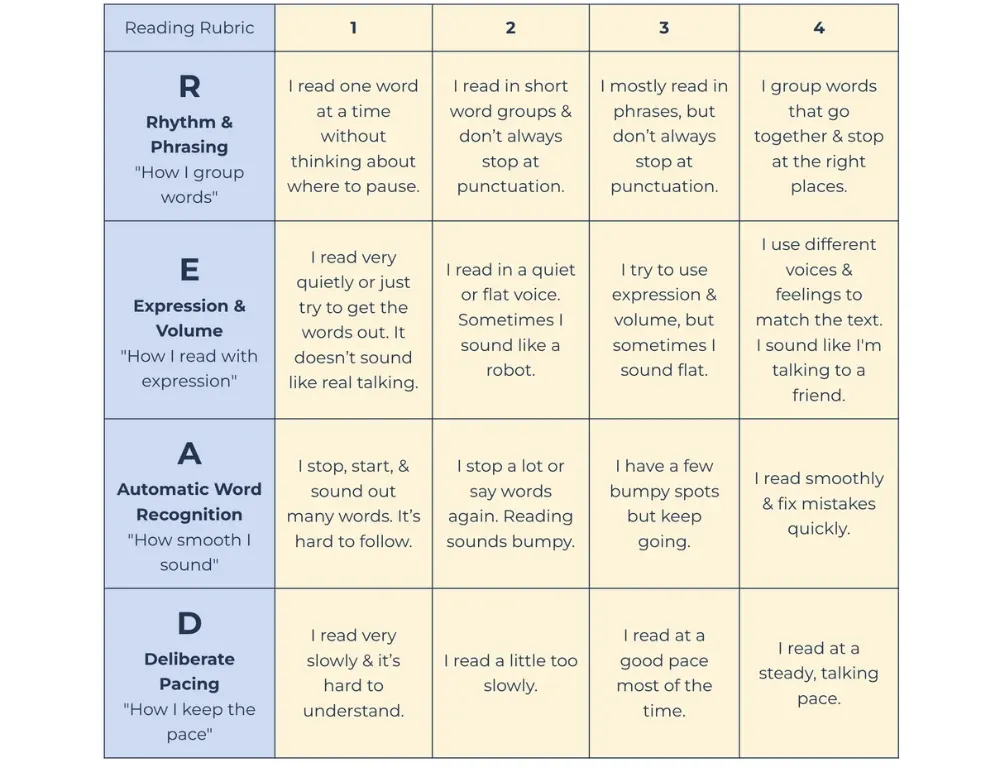
Try this: Choose a short paragraph. Read it once, reflect with R-E-A-D, and try again. Celebrate the improvement you hear!
High-Impact At-Home Strategies
Mix and match a couple of these approaches; just a few minutes practicing like this goes a long way.
- Model Read-Aloud. Read to your child with expression and clear phrasing. You’re showing what fluent reading sounds like and making reading feel enjoyable.
- Partner Reading. Take turns reading sentences or pages. You are the model for both fluency and expression.
- Choral Reading. Read together at the same time. Stay a whisper-ahead so your child can follow your lead.
- Repeated Reading. Revisit favorite pages or books. Repetition builds fluency, comprehension, confidence and expression.
- Daily Reading Time (15-20 minutes). Short, consistent practice increases fluency, comprehension, word recognition, stamina, and focus.
When Your Child Gets Stuck on a Word (Fast Prompt Set)

- Circle prefixes/suffixes (re-, un-, -ing, -ed).
- Underline the vowels.
- Scoop each part as you say it.
- Blend the parts to say the whole word.
Talk Before, During, and After Reading
Reading is about making meaning, not just decoding words.
- Before: Preview the title, text, and pictures; make quick predictions.
- During: Pause to check understanding and clarify confusing words or ideas.
- After: Summarize the main ideas; discuss feelings, lessons, or real-life connections.
Two Student-Approved Summarizing Moves
1) Paragraph Shrinking
Ask:
- Who or what is this section about?
- What’s the most important information about the who/what?
- Say the main idea in 10 words or less.
2) Find the GIST
Prompt with: Who/What? Did what? When? Where? Why? How?
Try writing a one-sentence GIST after each chapter. Keep them in a notebook to watch understanding grow over time.
Download: Printable Reading Checklist
Grab the 1-page, fridge-friendly checklist that includes the routine, R-E-A-D self-check, and the two summarizing moves.
For Teachers: Send-Home Blurb
Copy/paste into your next family newsletter or LMS post:
Reading together at home builds confidence and comprehension. Aim for 15-30 minutes most days. Help your child get ready by choosing a book together and finding a cozy, quiet spot. Before reading, peek at pictures and make predictions. During reading, pause to talk about tricky words and what’s happening. After reading, ask your child to summarize the big idea in 10 words or fewer (we call this “Paragraph Shrinking”). Kids can also self-check fluency with R-E-A-D: rhythm & phrasing, expression & volume, automatic word reading, and deliberate pacing. Small, consistent routines make a big difference and keep reading joyful!