
Intro to Activity
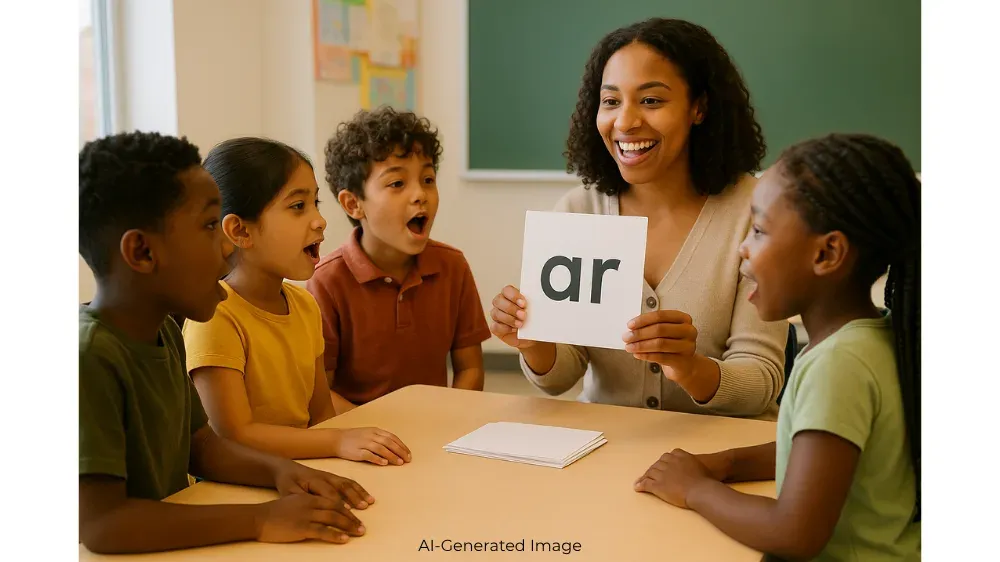
The Visual Drill is a routine intended to reinforce letter-sound knowledge. The teacher holds up a card displaying a grapheme (letter or group of letters representing one sound), and students quickly produce the phoneme (sound) that the grapheme represents. For this reason, the routine is sometimes referred to as "read sounds." The Visual Drill is a component of the Orton-Gillingham approach and is typically used as a warm-up at the beginning of a systematic, explicit phonics lesson as a review of previously learned letter-sound correspondences to improve both accuracy and automaticity of this knowledge. This activity requires little to no preparation and provides teachers with an ongoing opportunity to informally collect data on student progress.
Students
Discover the types of students who may benefit from this activity.
Teachers select graphemes for this activity based on their phonics scope and sequence and student needs for additional practice. Because of this flexibility, the Visual Drill is appropriate for students across a wide range of reading abilities. Students transitioning from the Pre-Alphabetic Phase (students have little to no alphabetic knowledge) through the Partial Alphabetic Phase (students recognize some letter-sound relationships) typically benefit from using the routine for symbol-to-sound practice.
Instruction and practice can typically begin in Kindergarten once students have mastered a few grapheme-phoneme correspondences and continue with older readers to practice unknown correspondences. For additional activities and guidance on applying this knowledge to decoding, review our Decoding Overview.
When readers reach the Consolidated Phase, students rely more on larger units (such as syllables and morphemes) rather than individual graphemes to decode. At this stage, direct symbol-sound practice is no longer necessary. However, some students may benefit from using a variation of the activity to reinforce the pronunciation of challenging morphemes (see Differentiation, below).
Getting Started
The steps outlined in the tabs below provide a clear and structured approach for teaching this activity to students.
Compile previously taught graphemes to create a review deck for the Visual Drill. The routine should be short. We recommend teachers spend less than two minutes on the drill. Therefore, you may not have time to review every previously taught grapheme each day. Practice newly learned correspondences more frequently, interspersing previously learned correspondences as a review.
Tell or remind students that we use letters to represent sounds in words. Explain the purpose of the activity.
Example:
"Let's review some letters by reading the sounds. Knowing these sounds helps us read words."
Model how to respond with a teacher-led demonstration.
Example:
"When I see this letter (hold up a known grapheme such as <p>), I know that we read this sound /p/. When I hold out my hand, everyone will say /p/ together."

Have students practice reading the sounds for several additional graphemes with you before proceeding. If necessary, prompt students by asking “sound?" or using a visual cue to respond.
Use a choral response to maximize participation (see Take Note! below for additional guidance).
Students will continue to read the sounds of graphemes. The students will be the ones reading the sounds, not the teacher. Monitor student responses for accuracy throughout the activity.
Immediately support students if they produce an incorrect phoneme or add an additional vowel sound to the end of the phoneme (such as 'juh' vs. a clipped /j/ production). You may put the card back in the deck so students have a second chance to practice the more challenging sound.
You can use learned keywords as cues.
Example:
"We learned this letter is shaped like someone jumping. Our keyword is jumping. What sound is at the beginning of jumping?"
If the students can't provide the sound on the second attempt, tell the students the sound and have them repeat it. Use phoneme articulation cues as needed.

Take Note!
Here are some special considerations when using this activity:
- Keep the focus on sounds. The purpose of the Visual Drill is to instantly pair a letter with its corresponding sound. To do this, drop keywords and letter names as soon as they are no longer needed. While practicing letter names with cards may occasionally be appropriate, it serves a different purpose. Similarly, reciting the name of keyword images may detract from building an automatic connection between letter shape and sound. For more information on supporting effortless retrieval of sounds, see Subskill Automaticity.
- Embedded picture mnemonics support early learning. Letters with embedded pictures (such as the AIM Animated Alphabet) can be a powerful tool to help students first learning basic letter-sound correspondences, but be sure to remove this scaffold once students are accurately producing the sound in order to support automaticity.
- Students should practice all known correspondences. For example, if students have learned <s> can represent both /s/ and /z/, they should provide both phonemes. You can show two fingers when presenting the grapheme as a visual prompt that students have learned two phonemes.
- Collect informal data. Note the grapheme-phoneme correspondences students struggle with. These graphemes should be practiced frequently during all parts of a phonics lesson. Any tracking method works, but some teachers find that a physical card deck allows them to easily create a pile of tricky correspondences and collect data without stopping instruction. Remember that the goal is for students to respond with both accuracy and automaticity, so you may also want to set aside graphemes that students respond to correctly but slowly.
- Maximize participation. In most situations, structuring this activity as a choral response, where all students respond simultaneously, is best, as it ensures everyone practices each presented correspondence. Use a visual cue (such as holding out your hand) to help students respond in unison. As needed, you may selectively call on individual students.
- Review skill overview. For additional considerations when targeting this skill, see the Alphabet Knowledge Overview.
Classroom Connection
See this activity in action through a teacher-led demonstration.
Here, a teacher uses the Visual Drill with a group of three students. Because she has a small group, she calls on one student at a time, ensuring each has multiple turns to practice symbol-sound correspondences. Notice how the teacher immediately corrects students' mistakes. As you consider using the activity, think about ways to maximize participation for all students.
Differentiation
Learn how you can enhance instruction to meet the needs of diverse learners.
- For students struggling to retain grapheme-phoneme correspondences, consider using Incremental Rehearsal (IR), a flashcard technique that integrates new pairings into a sequence of mostly known items. This high ratio of known-to-unknown exposures strengthens retention through repeated, distributed practice.
- Blends do not need to be memorized and, therefore, do not need to be included in the Visual Drill. However, some teachers include additional phoneme blending practice into the routine by having students hold up a finger while pronouncing each individual phoneme and then blending the phonemes together (e.g., for <cr>: /k/.../r/.../kr/).
- Students in the Consolidated Phase of word reading may benefit from a variation of the Visual Drill that includes pronunciation and meaning practice for challenging morphemes (e.g., "-ous, full of" as in joyous).
- For additional differentiation when targeting this skill, see the Alphabet Knowledge Overview.
Coaching Corner
For occasional use: optional ideas to bring energy, engagement, or ease to the activity.
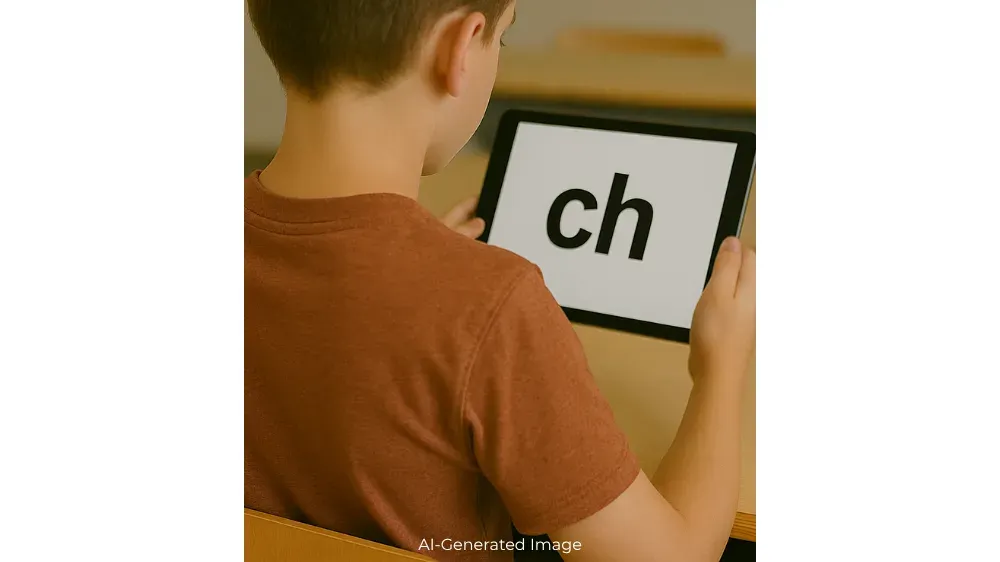
Digital flashcards can be displayed instead of cards to keep the routine fresh. Use a slide randomizer to randomly reorder learned graphemes.

Resource(s)
Explore the resource(s) to support your implementation of this activity.
Toolkit resources help you implement high-quality instruction. To guarantee student success, these tools must be used in tandem with direct, systematic, mastery-oriented instruction and a high-quality curriculum.