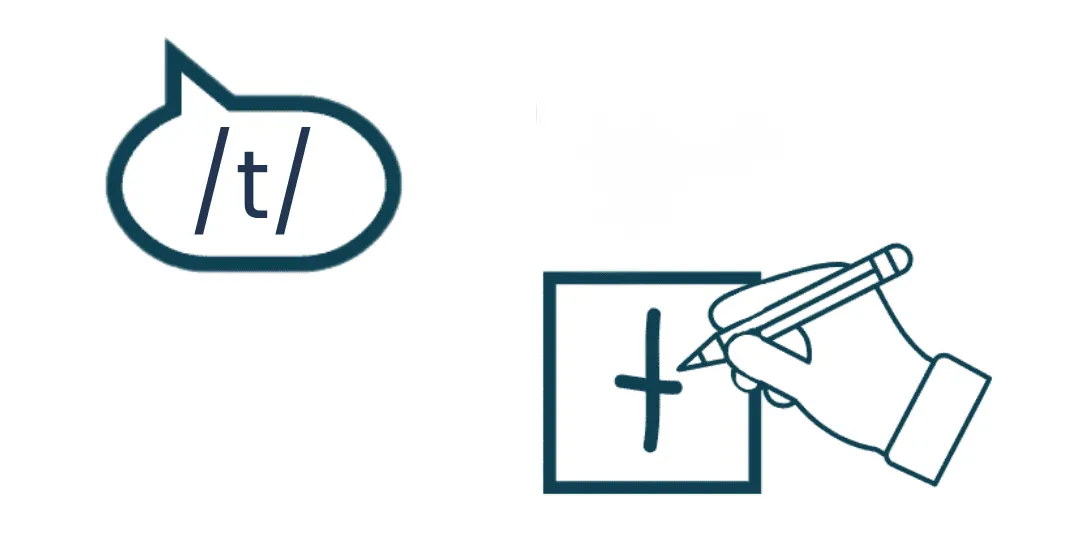
The Auditory Drill is a routine intended to reinforce sound-letter knowledge. The teacher says a phoneme (sound), and students quickly write all the known graphemes (letters) that represent the sound. For this reason, the routine is sometimes referred to as "write sounds." The Auditory Drill is a component of the Orton-Gillingham approach and is typically used as a warm-up at the beginning of a systematic, explicit phonics lesson to improve both accuracy and automaticity in sound-letter knowledge. It is easy to implement because it requires little to no preparation and provides teachers with an ongoing opportunity to informally collect data on student progress.
Students
Discover the types of students who may benefit from this activity.
Teachers select phonemes for this activity based on their phonics scope and sequence and student needs for additional practice. Because of this flexibility, the Auditory Drill is appropriate for students across a wide range of abilities. Students transitioning from the Pre-Alphabetic Phase (students have little to no alphabetic knowledge) through the Partial Alphabetic Phase (students recognize some letter-sound relationships) typically benefit from using the routine for symbol-to-sound practice.
Instruction and practice can typically begin in Kindergarten once students have mastered a few correspondences and continue with older readers to practice unknown correspondences. For additional activities and guidance on applying this knowledge to encoding, review our Encoding and Spelling Overview.
Getting Started
The steps outlined in the tabs below provide a clear and structured approach for teaching this activity to students.
Compile a short list of previously taught phoneme-grapheme correspondences to review. We recommend teachers limit this activity to fewer than five minutes. Therefore, you may not have time to review every previously taught phoneme-grapheme correspondence each day. Practice newly learned correspondences more frequently, interspersing previously learned correspondences as a review.
Tell or remind students that we use letters to represent sounds in words. Explain the purpose of the activity.
Example:
"Let's review some letters by spelling sounds. Knowing these sounds helps us spell words."
Model how to respond with a teacher-led demonstration.
Example:
- "If I hear /k/, I know two ways to write the sound."
- [Write <k>]
- "<k> spells /k/."
- [Write <c>]
- "And <c> can also spell/k/."
Dictate additional phonemes while supporting students to write the graphemes.
Initiate by dictating a phoneme and having students repeat it. Then, depending on student needs, either ask them to name the grapheme or tell them. Model writing the grapheme. Erase the model and have students write the grapheme themselves.
Example:
- Dictate: "/v/".
- Students repeat: "/v/."
- Ask: "What spells /v/?" (or Tell: "<v> spells /v/.")
- Write <v> and then erase.
- Students write <v>.
Students continue writing graphemes for dictated phonemes. The main focus is on writing the correct letter form(s) to represent the phoneme, but you may also want to take this opportunity to encourage proper letter formation and orientation to the lines. Keep the pace brisk and avoid turning this into a lesson on handwriting or spelling rules. Briefly clarify as needed, but prioritize ample, repeated practice with known phoneme–grapheme correspondences.
Create a system, such as holding up their whiteboard when done, so you can monitor student responses for accuracy throughout the activity.
Immediately support students who write incorrect graphemes or omit graphemes. As feasible, also monitor that students form their letters correctly.
You can use learned keywords as cues.
Example:
"Yes! <ch> spells /ch/. We know one more way to represent /ch/. How do you spell /ch/ and the end of catch? <tch>."
If the students can't provide the grapheme on the second attempt, tell the students and have them repeat it.
Take Note!
Here are some special considerations when using this activity:
- Keep the focus on building automatic correspondences. The purpose of the Auditory Drill is to instantly pair a sound with its corresponding grapheme(s). While reviewing spelling generalizations (such as when <c> is pronounced as /s/ or /k/) may occasionally be appropriate, placing lengthy emphasis on defining spelling patterns or spelling whole words during this routine may detract from building automatic phoneme–grapheme connections.
- Practice all known graphemes. Some phonemes can be represented with more than one grapheme. Students should practice all such correspondences that they have been taught. For example, if students have learned <c> and <k> can represent /k/, they should write both. You can show two fingers when dictating the phoneme as a visual prompt that students have learned two spellings. When they later learn <ck> also represents /k/, the spelling should be added to their lists.
- Maximize participation. Ensure that every student writes every known grapheme. Avoid turn-taking formats that limit practice opportunities.
- Draw students' attention to your mouth. Help students perceive each phoneme correctly by dictating the sound and having them watch your mouth as you articulate it. Be sure to listen to students as they repeat the sounds to ensure they hear the correct sound. When doing this activity as a whole class, you may want to provide a keyword for some voiceless sounds. For example, you might say "/h/, as in hot."
- The Auditory Drill is harder for most students than the Visual Drill. The ultimate goal is for students to produce all known graphemes for each phoneme from memory and write them. However, because producing a grapheme from a dictated phoneme (encoding) is often harder than recognizing a grapheme (decoding), students may need more repetitions and scaffolding during the Auditory Drill (see Differentiation, below).
- Determine if students will include hyphens and underscores. Some programs use hyphens and/or underscores to show spelling generalizations (e.g., <a_e> for /ā/ or <-oy> for /oi/). These can confuse some students since they do not appear when spelling words. Use professional judgment to determine whether to use these symbols with your students. If you do choose to use them, ensure students understand what these marks represent.
- Reinforce handwriting conventions. You may want to use this time to reinforce proper letter formation with handwriting paper. Emphasize starting points, stroke sequence and directionality, orientation to lines and size proportions as needed.
- The Auditory Drill is intended to be a brief component of a phonics lesson. Later parts of the lesson should have students apply this isolated knowledge to encode real words.
- Review skill overview. For additional considerations when targeting this skill, see the Alphabet Knowledge Overview.
Classroom Connection
See this activity in action through a teacher-led demonstration.
The following video contains two clips. In the first, a teacher uses the Auditory Drill with a small group of students. The second clip demonstrates variations of the Auditory Drill. As you watch, observe the teachers' different instructional moves and consider how they may impact students’ engagement and understanding.
Differentiation
Learn how you can enhance instruction to meet the needs of diverse learners.
- For students who struggle with letter formation, provide a clear model of the alphabet on handwriting lines for students to reference.
- If, after continued modeling and corrective feedback, a student struggles to produce graphemes from memory, scaffold the task by presenting a small set of graphemes. Have students choose the correct grapheme in response to the dictated sound, then write it on their paper. The student may benefit from copying the grapheme a couple of times while saying its sound. Make note that this correspondence will need more frequent practice/review.
- Some teachers prefer to have students write the graphemes in the order of frequency the spelling pattern is used. This consistent order can help with retrieval and with making a spelling choice when no spelling generalization is available. It may be beneficial for students who struggle with spelling.
- While not necessary, some teachers include additional phoneme segmentation practice in the Auditory Drill (e.g., "Spell the short vowel you hear in the word top."<o>; "Spell the ending blend you hear in the word fond." <nd>).
- Students in the Consolidated Phase of word reading (students rely more on larger units such as syllables and morphemes rather than individual graphemes to decode) may benefit from a variation of the Auditory Drill that includes spelling morphemes (e.g., "Spell the suffix at the end of joyful." <ful>).
- For additional differentiation when targeting this skill, see the Alphabet Knowledge Overview.
Coaching Corner
For occasional use: optional ideas to bring energy, engagement, or ease to the activity.
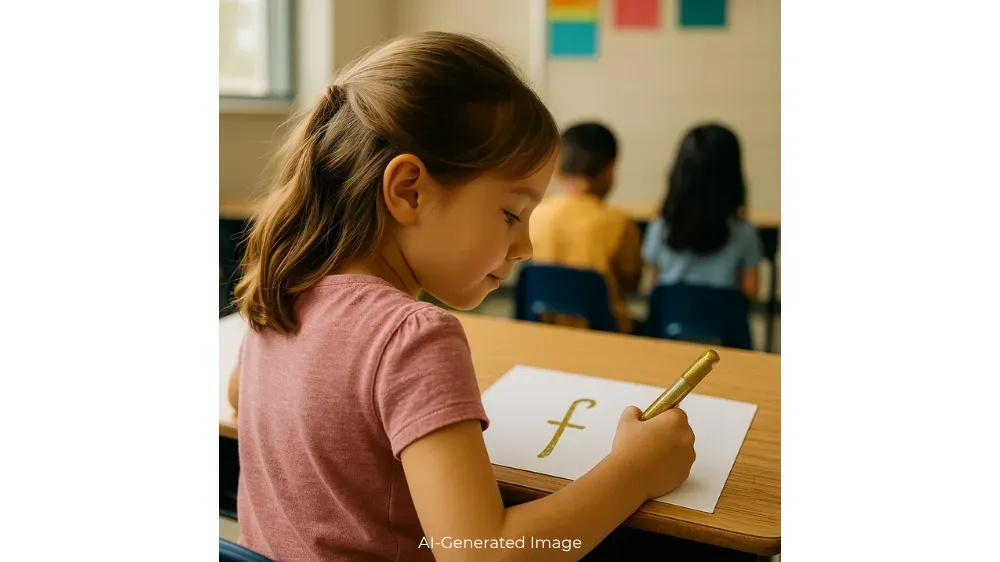
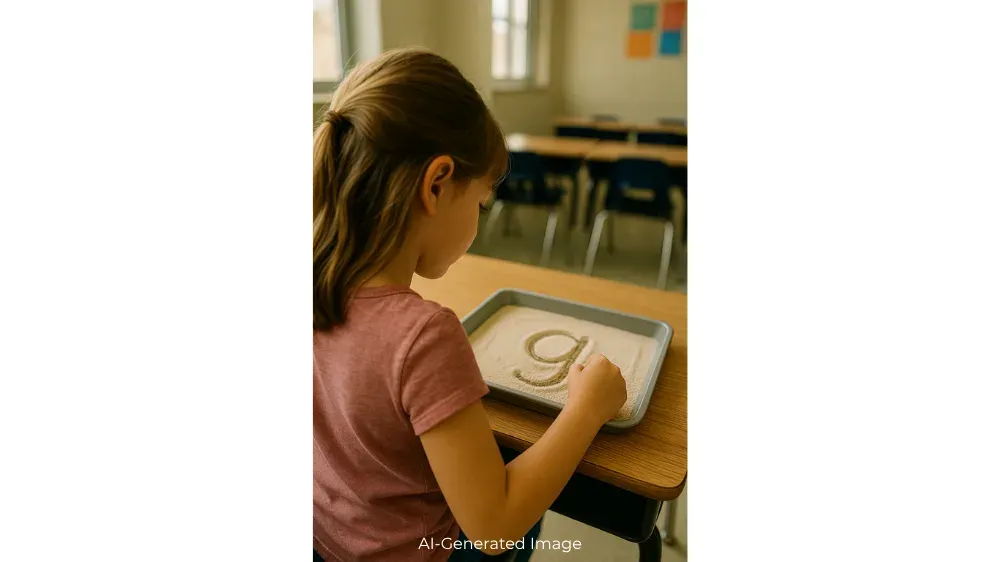
Let students write with a special writing utensil like a glitter pen or a scented marker. Teach students to cross off any mistakes with a line and move on.
Resource(s)
Explore the resource(s) to support your implementation of this activity.
Toolkit resources help you implement high-quality instruction. To guarantee student success, these tools must be used in tandem with direct, systematic, mastery-oriented instruction and a high-quality curriculum.