
Intro to Activity
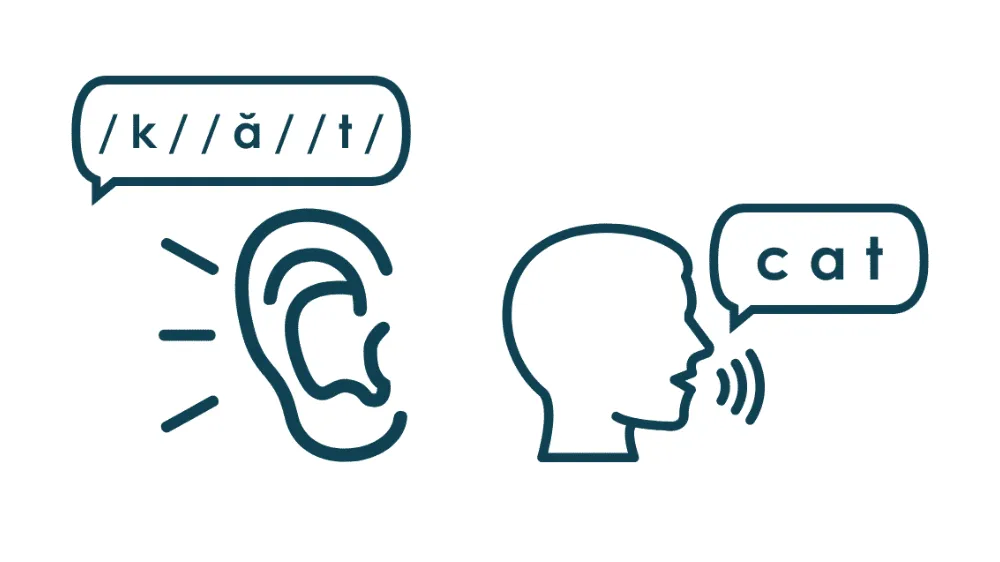
Blending individual phonemes (sounds) into a whole word can initially be practiced with students before they know some, or any, of the associated phoneme-grapheme (sound-letter) correspondences. Before they can decode the letters on a page into a word, students can practice blending orally by listening to the teacher say each sound in a word with a slight pause (approximately one second) between each sound, and responding with the target word. Like all phonemic awareness activities however, phoneme blending tasks should incorporate letters once the appropriate correspondences have been introduced.
Students
Discover the types of students who may benefit from this activity.
Most students can blend the phonemes of short, two- to three-sound words by six years old. Therefore, instruction and practice in phoneme blending can typically begin in Kindergarten when students show sensitivity to the sounds in spoken language. About 20% of students need explicit instruction to acquire phonemic awareness skills such as phoneme blending.
Younger students (regardless of grade) may not be ready to demonstrate this skill yet, whereas it might be an appropriate skill target for older students who continue to be in the Partial Alphabetic Phase of word reading development. In this phase, students are learning basic letter-sound relationships and might be trying to "read" a word based on its first letter alone. Once students have progressed to the Full Alphabetic Phase (most major letter-sound correspondences are in place), they can decode words by fully analyzing letter sequences, and blending practice would continue in the context of letters, blending the sounds to read the words.
Getting Started
The steps outlined in the tabs below provide a clear and structured approach for teaching this activity to students.
Prepare a word list at the appropriate difficulty level for your students. Start with words that have 2-3 sounds, such as in, eat, and safe.
Keep in mind how the phonemes used in the target words will impact difficulty. Continuant phonemes (those that can be held out, such as /m/) that are present in a student's home language or dialect will be easiest. See also Take Note!, below.
State the purpose of the lesson by explaining you are going to work on a skill that helps them prepare to read. State that you are going to say a word very slowly, one sound at a time, and that they will blend the sounds together to make a word.
Provide the individual sounds of a familiar word, spaced out at approximately one-second intervals.
Example:
"Listen to these sounds /m/.../ă/.../t/. Now I'm going to say those sounds again, without any pausing between the sounds. /m/.../ă/.../t/- mat!"
Next, practice this skill with your students. Provide the segmented sounds aloud to the students, with the whole group responding with the blended word in unison.
Practice several words with your students before proceeding.
Students now provide responses independently. In whole-class instruction, students can respond chorally or take turns blending words with a partner.
Closely monitor student responses throughout all portions of the lesson. Provide immediate corrective feedback when students provide an inappropriate response. For example, if a student responds "duck" to the sounds /d/.../ŭ/.../g/, you might say "Close! But I'm saying a different sound at the end. Listen again" before repeating the sounds and allowing the student a second attempt.
If the student is unable to blend the sounds appropriately on the second attempt, provide the appropriate response.
Take Note!
Here are some special considerations when using this activity:
- Start simple. Begin with words with two or three-sound words. Words with consonant clusters (e.g., sleigh and ink) will be slightly more challenging.
- Phonemes, not graphemes. When presenting segmented sounds for students to blend, make sure to provide the appropriate phonemes in the word's pronunciation, without letting the spelling of the word influence you. For example, the word is would be presented as /ĭ/.../z/ (not /ĭ/.../s/ like the spelling might suggest).
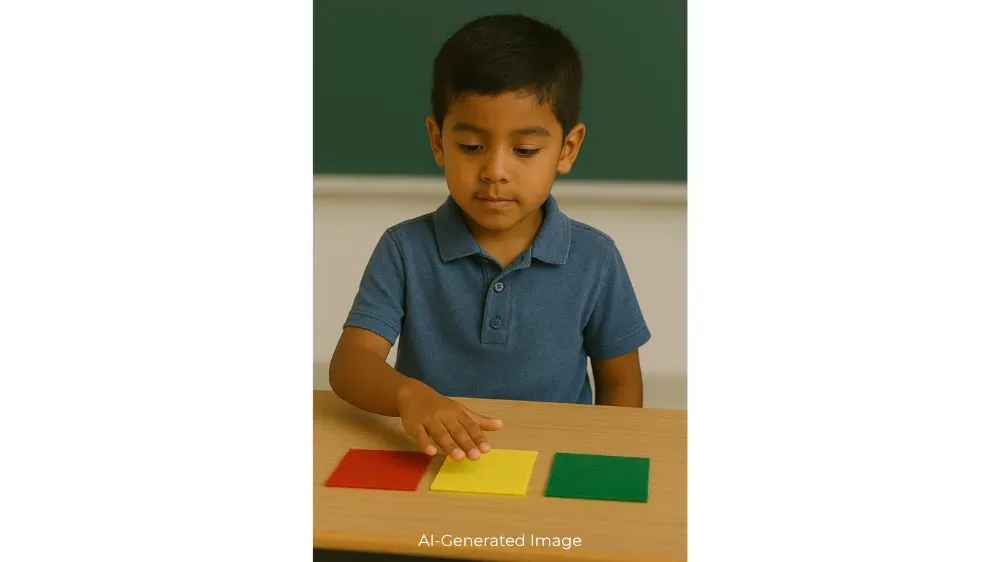
- Reinforce left-to-right orientation. If a teacher provides a manipulative for each phoneme (described in detail in the Coaching Corner, below), students should swipe their fingers across the items in a left-to-right movement.
- Encourage simultaneous learning. Students should not wait to begin learning sound-letter correspondences until they have mastered phoneme blending. Once students have learned the sound-letter correspondences for a given phoneme, they can practice blending the appropriate sounds when they see a short word using the learned letters. Although this activity can be done without showing letters, pairing the corresponding phonemes to the graphemes will be the next step to bridging this phonemic awareness task to reading and spelling.
- Review skill overview. For additional considerations when targeting this skill, see the Phonological/Phonemic Awareness Overview.
Classroom Connection
See this activity in action through a teacher-led demonstration.
Watch as this teacher practices phoneme blending with a small group of students as a brief warm-up activity.
Differentiation
Learn how you can enhance instruction to meet the needs of diverse learners.
- When a student blends sounds and produces a word that’s close but not quite right—maybe the vowel is slightly off or their voice lacks confidence—it may signal that they haven’t fully connected the blended sounds to a known word in their oral vocabulary. To support this with words that you are confident the student is familiar with, ask the student to use the word in a sentence or provide a synonym. This encourages them to anchor the word to meaning and can help solidify accurate word recognition. This task can also begin to introduce students to the linguistic flexibility they must demonstrate when reading a non-transparent orthography such as English.
- Other times, students may be blending words unfamiliar to them. Using picture cues after the student has blended the word can help reinforce or introduce new vocabulary. This can be especially helpful for English Learners and students with language difficulties.
- For additional differentiation when targeting this skill, see the Phonological/Phonemic Awareness Overview.
Coaching Corner
For occasional use: optional ideas to bring energy, engagement, or ease to the activity.

Some teachers like to visually show blending by moving their hand from right to left (so it appears left-to-right for students). This is optional. What is important is that students are blending the sounds together.
Resource(s)
Explore the resource(s) to support your implementation of this activity.
Toolkit resources help you implement high-quality instruction. To guarantee student success, these tools must be used in tandem with direct, systematic, mastery-oriented instruction and a high-quality curriculum.