To meet your goal of being more data-driven and responsive to students’ needs in 2023, consider a simple solution to remaining organized, a data binder, to guide your small group instruction. This binder should include student data, your scope and sequence, and lesson plans.
Point 1 - Data:
Starting with the universal screener data you’ve collected as your ‘temperature check,’ identify any students who may be at risk of reading difficulties. Keep a list of the data from each benchmark period - fall, winter, and spring to recognize whether learners are progressing towards their goals.
Learners who are not meeting the expectation at each benchmark screening period should be administered diagnostic assessments to identify the exact skill deficits. Informal diagnostic examples include reading and spelling tasks like the ones pictured here:
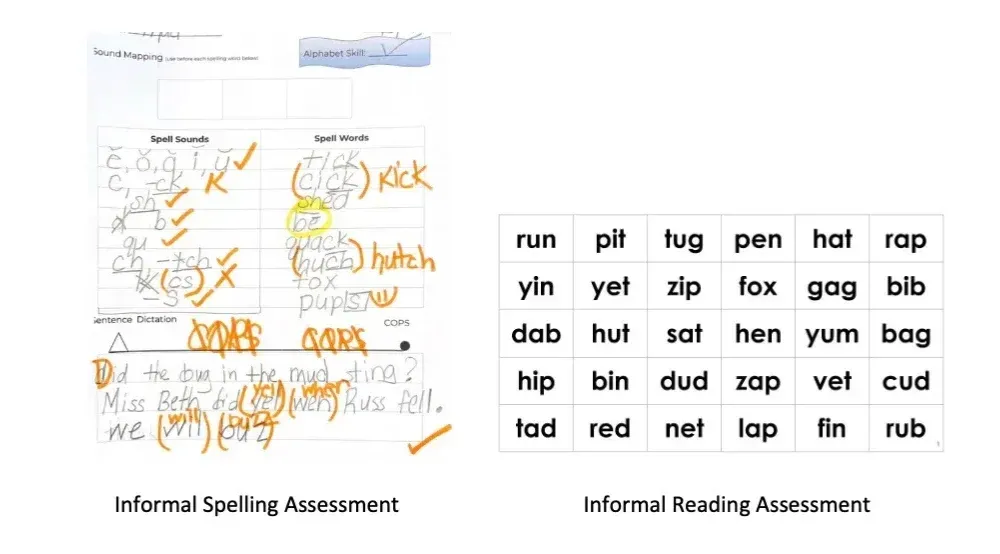
Again, storing this data in the binder along with notes that clearly identify the instructional focus provides justification on why the learner needs additional support beyond their whole group classroom instruction.
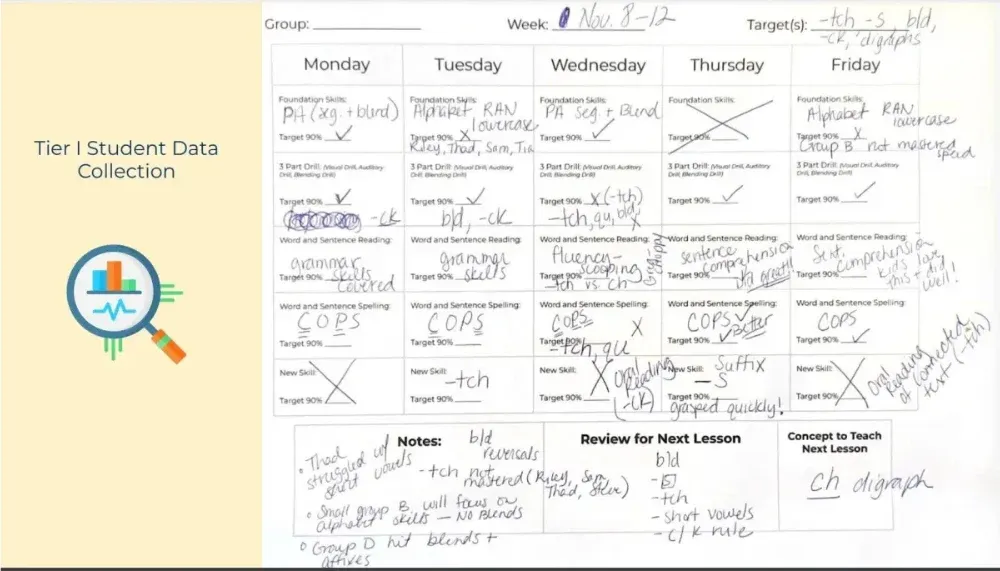 As targeted instruction is implemented for the identified group of learners, teachers monitor how students are responding to the instruction by analyzing student work and keeping anecdotal records daily that are stored in the binder.
Point 2 - Scope & Sequence:
The diagnostic data helps teachers identify the placement of student(s) within a structured literacy scope and sequence. Start with the first missed skill and provide instruction following that scope and sequence continuum. When forming groups, it is best practice to group students based on similar targets/skills. For instance, if a group of second- grade students are working on short vowels and consonants within closed syllable words, they would then be placed in Target 1 of the AIM Structured Literacy Scope & Sequence.
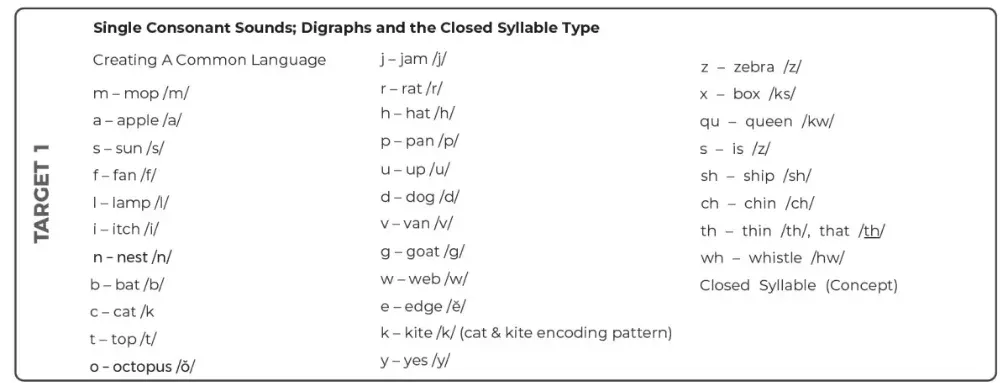 Continue to use your informal assessment data to adjust groups as needed. Students should never be “locked” into an intervention (tier 2) group. Groupings must remain flexible and allow the data to guide instructional decisions for each individual student.
Point 3 - Lesson Plans:
The lesson plans used to develop students' skills within the scope and sequence may mirror the AIM Structured Literacy Lesson Outline, though the exact order of lesson elements may shifts among programs. This lesson plan is used in Tier 1, whole class instruction, but also modified for small group lessons to be responsive to the concepts that specific students have not shown mastery of through their assessment data (from point 1). To remain diagnostic and prescriptive expert teachers are consistently reflecting on students performance from the previous day and using that data to inform their next lesson plan. Storing these lesson plans in the binder allows them to be revisited and retaught if needed.