
Intro to Activity
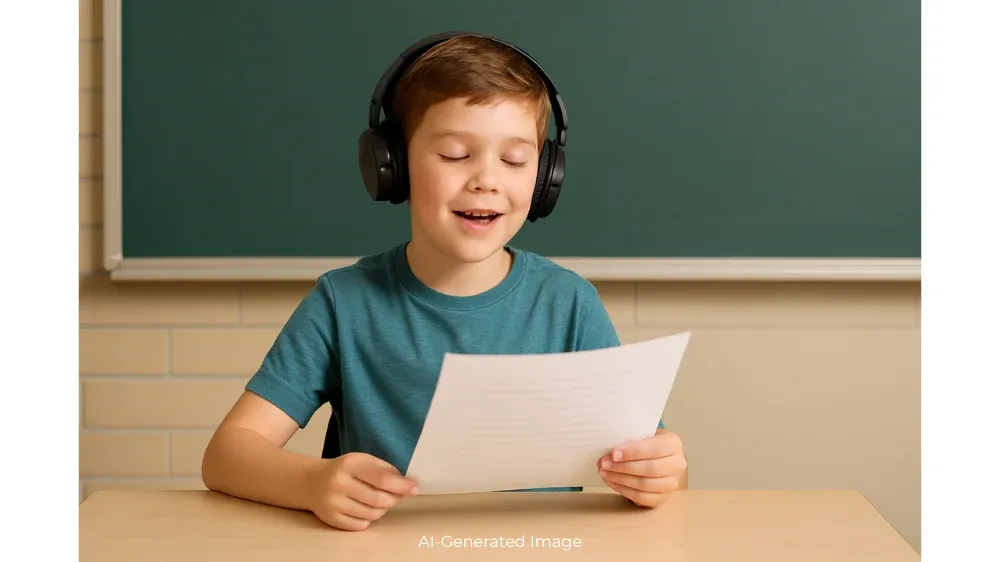
Repeated oral reading is a fluency practice where students read the same passage aloud multiple times. This strategy can be used not only to reinforce newly taught phonics concepts but also to support overall oral reading fluency that generalizes to new texts. In other words, students improve their reading skills beyond just the passage they practiced. Repeated readings can be used in both classroom and intervention settings, with a teacher or a partner, with either controlled texts (e.g., decodable passages) or non-controlled texts. Students aim to read not only accurately, but with appropriate pace (automaticity) and prosody, to best support comprehension. The goal is not to read as fast as possible, but to correctly and effortlessly read the words with appropriate phrasing, expression, and attention to punctuation.
Students
Discover the types of students who may benefit from this activity.
Repeated oral reading is most researched for students in grades 1-4, but can be a promising strategy for struggling readers in later grades needing additional support with fluency. It has been shown to be effective for both students with and without learning differences.
Getting Started
The steps outlined in the tabs below provide a clear and structured approach for teaching this activity to students.
Choose texts of appropriate length and difficulty level for each student or pair. Most students will benefit from texts that are between 200-250 words long, at their instructional level (no more than one in ten words read incorrectly), and that are rich enough to warrant rereading.
Introduce the text and the purpose of the read. For example, if the purpose of your first read is accuracy and the second read is pace and/or expression, you might say:
"Now we are going to read this same text again, but this time I want us to concentrate on reading this so that it sounds like we are telling a story."
Next, model reading the text to match the purpose for reading. Depending on your students and the purpose of the (re)read, you may want to first expand on the targeted objective for the read.
For example, for a second read focusing on pace and/or expression, you might model reading a short sentence in a slow, choppy manner, followed by a reread at a more appropriate speed and tone of voice.
Then, students practice reading and receive feedback on their reading. Students might practice reading aloud to a partner, allowing many students to practice simultaneously. However, consider that feedback given by a teacher is proven to be the most effective strategy for implementing repeated oral readings.
Students continue to practice rereading the text until they meet the set mastery criterion or the targeted number of rereads. Note that the repetitions do not need to take place all in one day.
Corrective feedback is a vital step for this activity. If the student misreads a word, prompt them to try again first with a general prompt (e.g., “Try that again”) before helping them more specifically with the misread sound/letter correspondence. If necessary, provide the target word and have the student repeat it. Then, best practice would be for the student to reread the full sentence for fluency and meaning.
Take Note!
Here are some special considerations when using this activity:
- Establish the plan ahead of time. When the goal of rereading is to increase fluency and comprehension of a specific text, reading it three to four times is proven most effective.
- Plot a benchmark. When the goal of rereading is to transfer reading proficiency across texts, it is advisable to read the text until students reach a preset criterion (such as reaching the number of words correct per minute in line with the 50th percentile for the student's grade).
- Space the practice. It is generally recommended that rereadings span the course of a couple of days (spaced practice), rather than consecutively in one day (massed practice).
- Feedback is critical. Repeated oral readings are most effective when the student is given immediate corrective feedback. This feedback is best when provided by a teacher, but may be provided by a strong peer if necessary.
- Review skill overview. For additional considerations when targeting this skill, see the Automaticity and Fluency Overview.
Classroom Connection
See this activity in action through a teacher-led demonstration.
Watch as this teacher begins a repeated oral reading session. Notice that she chose an alternative means of providing corrective feedback for the students' misread words, by immediately providing the corrected word, and then reviewing the words after the student completed the first read. Depending on student needs, this approach may help preserve the flow and meaning of the text.
Differentiation
Learn how you can enhance instruction to meet the needs of diverse learners.
- Most research on repeated oral readings has been conducted using text at the student's instructional level (90-95% accurate). However, students may benefit from reading texts they find slightly more challenging if given ample support.
- Increase motivation in reluctant readers by establishing clear objectives for this activity. This can be accomplished by setting a different purpose or target for each repetition (more below) or bringing authenticity into repeated readings, such as rehearsing for a performance (see details in Coaching Corner, below).
- For students who struggle with language comprehension, you might set consecutive purposes for reading that scaffold towards the larger goal of comprehension rather than solely focusing on fluency. For example, in the first read, students may focus on reading the words accurately, and subsequent reads may focus on different language goals. Students' second read may target using context clues to define challenging vocabulary or unfamiliar idioms.
- For students whose confidence is a significant barrier to participation, consider practicing the text with them ahead of time, so they gain some fluency and comfort with the passage before the rest of the class has their first run-through.
- For additional differentiation when targeting this skill, see the Automaticity and Fluency Overview.
Coaching Corner
For occasional use: optional ideas to bring energy, engagement, or ease to the activity.

Assign each student in a small group a role from a play manuscript for reader's theatre. Students can practice their lines before performing it together. This technique especially necessitates the need for students to read with appropriate expression.

Resource(s)
Explore the resource(s) to support your implementation of this activity.
Toolkit resources help you implement high-quality instruction. To guarantee student success, these tools must be used in tandem with direct, systematic, mastery-oriented instruction and a high-quality curriculum.