
Related Content
Multiple Meaning Maps visually demonstrate how a single word can have several distinct meanings. A comprehensive, step-by-step guide on how to use this graphic organizer to help students explore the breadth and nuance of word usage by organizing word meanings in a structured, connected way.
15 min
Semantic gradients are an instructional strategy to help students explore the subtle differences in word meanings. A comprehensive, step-by-step guide on how to use semantic gradients to support student vocabulary development by promoting more precise and sophisticated word choices in speaking and writing, while also enhancing comprehension through a more refined understanding of related terms.
16 min
Vocabulary knowledge exists on a spectrum. We know the meanings of some words, along with their connotations, well. We use these words readily and easily in speech and writing. We recognize other words, but with only a vague understanding of their meanings (It has something to do with computers, I think), or not at all (I've heard that word before, but I don't know what it means). Because of this variability, when we consider vocabulary knowledge, we should account for both vocabulary breadth (how many words one is familiar with) and depth (how well some of those words are known).
6 min
Explore essential terms in the Science of Reading. This glossary breaks down key terms into simple, clear explanations.
2 min
There is an urgent need for literacy education to pivot towards a more scientific understanding of reading. Evidence-based professional learning equips teachers to deliver effective, equitable reading instruction that improves outcomes.
5 min
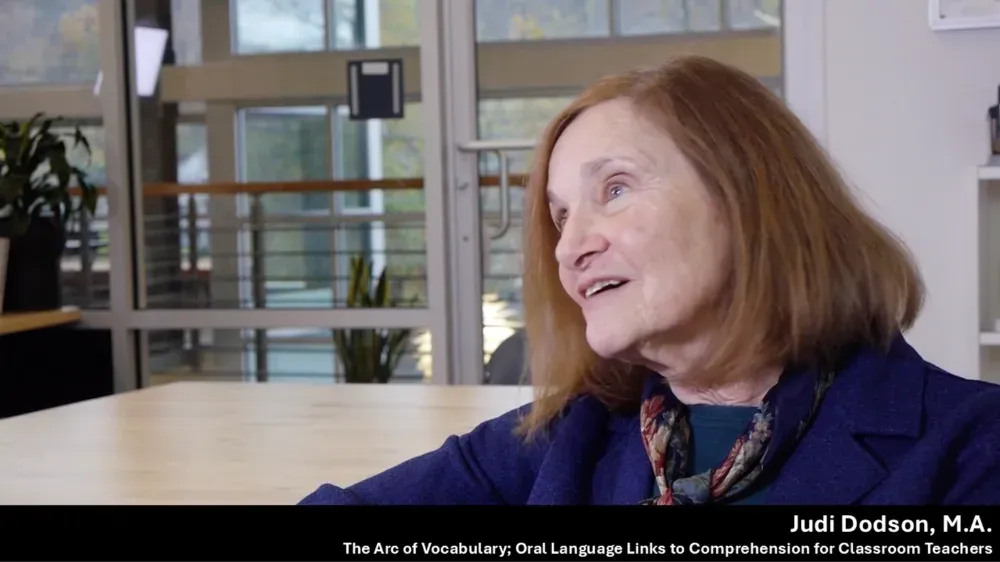
Oral language drives strong literacy instruction. Judi Dodson shares what effective oral language teaching looks like and how every teacher, not just specialists, can embed it in daily routines to strengthen communication and learning.
5 min