Intro to Activity
A non-phonetic (irregular) word is a word that generally includes both regular and unexpected phoneme-grapheme (sound-letter) correspondences. Many high-frequency words (words that appear often in text) are non-phonetic, and can be particularly challenging for beginning readers who are decoding words using their phonics knowledge. These words are sometimes called tricky words, red words, heart words, sight words, etc. However, the term "sight words" is misleading because all words, not just non-phonetic ones, should eventually be recognized rapidly, seemingly "by sight," by building an orthographic representation (spelling memory) of words and word parts. Unfortunately, this confusion has led some teachers and parents to believe that students should memorize all non-phonetic words as whole units. Research shows this is not an effective way to help students learn to read most words.
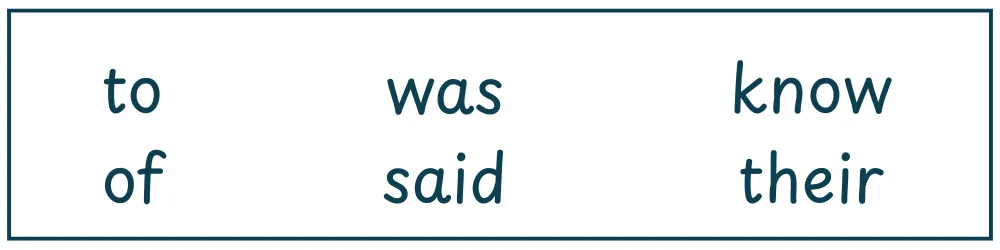 Sometimes, our pronunciations for words evolve when our spelling doesn't. Did you know the <kn> in know used to be pronounced /kn/ even though today we use /n/? The spellings for many English words have interesting histories like this because many factors influence our language!
The Routine for Introducing Non-Phonetic Words gives students a consistent, structured method to learn these words by tuning into the individual letters in the word's spelling, rather than thinking of it as a string of random letters or a chunk to be memorized. The routine helps students become aware that irregularly spelled words aren't completely irregular. It's usually just one phoneme that's spelled unexpectedly. We can still rely on our phonics skills to read all the rest.
In the routine, the teacher orally introduces a word, students segment the phonemes, the teacher reveals the word's spelling, and students analyze which parts of the spelling are regular and which are unexpected. The routine strengthens students’ knowledge of phoneme-grapheme relationships and reinforces phonemic awareness to promote efficient, automatic word recognition.
Students
Discover the types of students who may benefit from this activity.
Teachers can use the Routine for Introducing Non-Phonetic Words with any non-phonetic word, adjusting the analysis to match their phonics scope and sequence. Because of this flexibility, the routine supports students across a wide range of abilities. It is best suited for students who can blend and segment phonemes and are beginning to connect phonemes to graphemes to read and spell words.
Preliminary research has examined this approach for teaching non-phonetic words as part of effective word learning in grades K-1. However, all students need instruction to build automatic recognition of high-frequency words, both regular and irregular. The routine’s design reflects established research on connecting phonemes and graphemes to support accurate decoding and encoding. Therefore, it may also offer a promising strategy for older students and struggling readers who need additional support learning non-phonetic words.
Getting Started
The steps outlined in the tabs below provide a clear and structured approach for teaching this activity to students.
Compile a small number of high-frequency non-phonetic words that students need support reading. Prioritize high-utility words for instruction and, if applicable, group words with shared or similar spelling in a set (e.g., could, would, and should) to help students notice patterns. Focus on words that are critical for reading fluency, as not all non-phonetic words need to be introduced immediately.
Some words are only temporarily non-phonetic. Words like my are decodable, but may be introduced in texts before students have been taught the needed phonics patterns (in this case, <y> for /ī/). In some cases, it may make sense to wait to introduce these words until students have learned the phonics pattern. In other instances, it may be a high-utility word that makes sense to teach.
Consider selecting words from a recent or upcoming text to increase relevance and transfer. For additional guidance on word selection, see Take Note!, below.
Let students know that some words are not spelled the way they sound. Explain the purpose of the routine.
Example:
"There are some words we see a lot that are a little tricky because they have letters we wouldn't expect. It can take some extra practice to learn to read and write these words. Today, we're going to look at a few of these words and figure out how they work."
Model the routine with a teacher-led demonstration using a familiar example word.
Example:
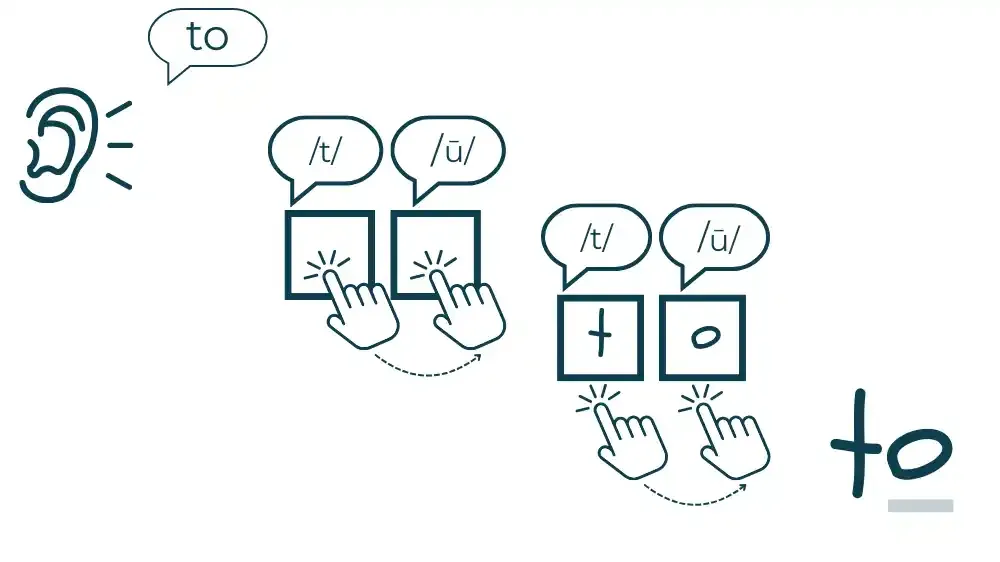
Introduce the word orally
- "The word is: to. I like to read books before I go to bed."
Segment the phonemes
- [Optionally use an Elkonin box or tokens to represent the phonemes.]
- "Listen to the sounds in to: /t/.../ū/"
Connect (map) phonemes and graphemes, and analyze
- [Write or display the word.]
- "The first sound I hear is /t/. That's spelled with the letter <t>."
- "The next sound is /ū/, but that's spelled with the letter <o>. That's not what I would have expected! The letter <o> in this word is a little tricky. Let me practice sounding it out again."
- [Point under <t>] "/t/."
- [Point under <o>] "/ū/."
- [Slide finger under the entire word] "to."
- "To is spelled <t>, <o>."
Guide students through the routine for each high-frequency non-phonetic word you prepared.
Example:
Introduce the word orally
- "The word is: could. Yesterday, it was raining, so we could not go outside, but today we could play on the playground! Say the word with me: could."
Segment the phonemes
- [Use an Elkonin box or tokens as needed.]
- "Let's say the sounds in could together: /k/.../oo/.../d/."
Connect (map) phonemes and graphemes, and analyze
- [Write or display the word.]
- "What is the first sound in could?" (/k/) "How is /k/ spelled?" (<c>)
- "What's the next sound in could?" (/oo/) "Woah, /oo/ in this world is spelled with the letters <oul>! That's not what I would expect."
- "What letters spell /oo/ in could?" (<oul>)
- "What's the last sound in could?" (/d/) "How is /d/ spelled?" (<d>)
- "Let's look at the letters while we sound the word out together. [Point under <c>] /k/. [Point under <oul>] /oo/. [Point under <d>] /d/. [Slide finger under the entire word] could. What's the word?" (could)
- "How do we spell could?" (<c...o...u...l...d>).
Expect non-phonetic words to take more time and repetition for students to learn. Plan for multiple, varied opportunities to read and write these words in meaningful contexts. Prioritize activities that help students connect phonemes to graphemes and provide opportunities for students to read and write learned non-phonetic words in isolation and connected text.
It is normal, and potentially even helpful, for students to initially sound out a word phonetically. For example, sounding out said as /s/.../ā/.../d/. The important part is that students begin to recognize this mispronunciation and then correct it with the accurate pronunciation (said). This mispronunciation correction can help set the stage for the linguistic flexibility that students must sometimes demonstrate when reading, and may help them establish a "spelling pronunciation" that aids them in remembering how to write these non-phonetic words.
Example:
- If a student reads the word do as /dō/ or /dŏ/, point to the vowel and remind students of the irregularity.
- "In this word, the letter <o> represents the sound /ū/. Try reading it again with the /ū/ sound."
- If the student needs less of a scaffold, you might say:
- "Yes, it looks like /dō/ but we pronounce it do," and allow the student to reread the sentence with "do."
Take Note!
Here are some special considerations when using this activity:
- Popular word lists should be resources to consult, not checklists. Compilations like the Dolch and Fry lists can help you identify high-frequency words that students are likely to encounter in text, but many of these lists contain words that are phonetically regular and may not need this routine to introduce the words. Therefore, use compilations cautiously to help you prioritize which words to teach based on students’ current phonics knowledge, the texts they will be reading, and your scope and sequence.
- Reserve memorization for a small number of essential words. To read beginner texts, students may need to know a handful of words that contain no fully decodable parts or parts that students do not yet have the phonics knowledge to decode (e.g., the, are, and of). When necessary, support students in learning them, but generally, avoid teaching non-phonetic words as unanalyzed wholes.
- Avoid letting a phonics pattern derail the focus of instruction. When teaching a word with temporarily irregular spelling patterns (e.g. /er/ in her), you may choose to briefly preview the /er/→<er> phoneme-grapheme relationship, but avoid making it the focus of the lesson. Phonics instruction should follow a systematic sequence.
- Use meaning or morphology when it supports understanding. For some non-phonetic words, especially those with no clear phoneme–grapheme match, connecting the word to its meaning or related words can support learning. For example, linking two with related words like twin, twenty, or twice helps students make sense of the unexpected <w> and helps to explain why it is spelled differently from its homophones (e.g., to, too).
- Adapt the analysis order to fit your students' needs. Some teachers prefer to segment and analyze the word from left to right and note irregularities as they appear (see Getting Started, above), while others prefer to analyze the non-phonetic part of a word last (see Classroom Connection, below). Either approach can be effective. Use the method that aligns best with your students' needs.
- Analyze the word using its actual spelling. Guide students to analyze the word based on the printed letters, not what they think should be there. For example, asking, “What sound do you expect to see in the middle of said?” may lead students to remember the word incorrectly (e.g., expecting <e> instead of <ai>). Instead, show the correct spelling and help students connect the phonemes to the graphemes as they appear, to identify which parts are regular and which are not.
- Avoid visual mnemonics that distract from phonics. Visual tricks (e.g., like drawing eyes inside the <oo> in look) may initially be memorable, but they don’t support long-term word learning, teach transferable decoding skills, or help the child read similar words (e.g., book, cook, took). While there are instances when a visual can strategically be used (e.g., for homophones, to connect spelling with meaning), in general, it's best to avoid instruction that teaches students to use visual features to read words.
- Review skill overview. For additional considerations when targeting this skill, see the Decoding Overview.
Classroom Connection
See this activity in action through a teacher-led demonstration.
The video below begins with a review of the characteristics of non-phonetic words and provides an additional analysis of the word said. Then, a teacher models the Routine for Introducing Non-Phonetic Words in a virtual setting. A suggestion for guided practice is also demonstrated. Notice the language used in the lesson, and reflect on how your students respond best: some may benefit from more technical vocabulary, while others may engage better with student-friendly terms.
Differentiation
Learn how you can enhance instruction to meet the needs of diverse learners.
- Many high-frequency non-phonetic words are function words. Function words (e.g. the, to, could) can be more difficult to learn than nouns and verbs because they carry less concrete meaning and are harder to visualize. Embedding these words in simple, meaningful sentences when reading and writing helps students connect them to their function in a sentence and their meaning.
- While embedding words in context supports language development, isolated practice is often more effective for helping students recognize high-frequency non-phonetic words quickly and automatically. Students generally need both instructional methods. Use your students' needs and characteristics of the words you've selected to determine how best to allot instructional time.
- For students struggling to read non-phonetic high-frequency words, try highlighting or otherwise drawing attention to the tricky pattern. For example, label the non-phonetic part (e.g., was, said, would) with a heart, star, or other symbol.
- For additional differentiation when targeting this skill, see the Decoding Overview.
Coaching Corner
For occasional use: optional ideas to bring energy, engagement, or ease to the activity.
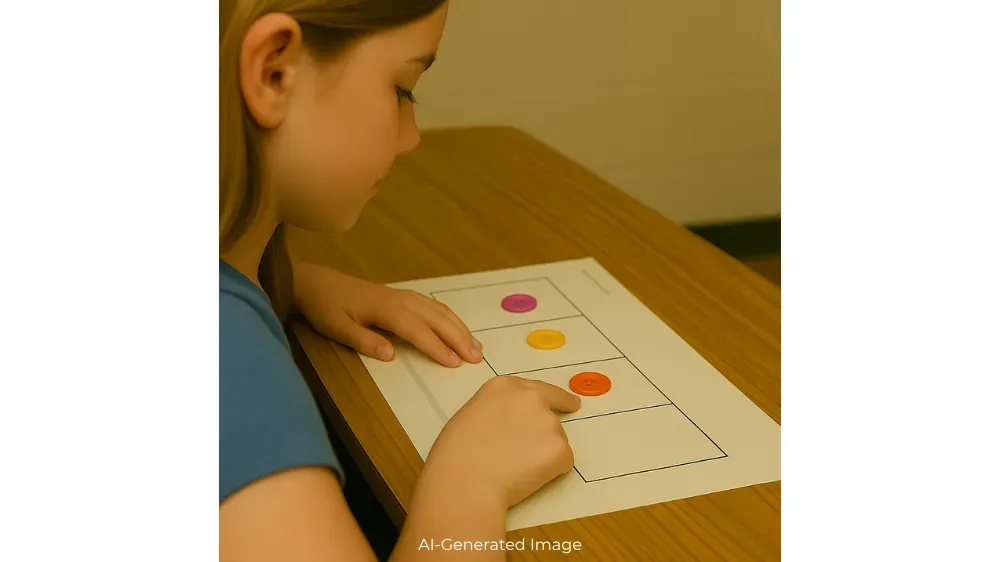
If using "tokens" to segment phonemes, mix up the tool students use. Try counters, buttons, mini-erasers, felt squares, etc.

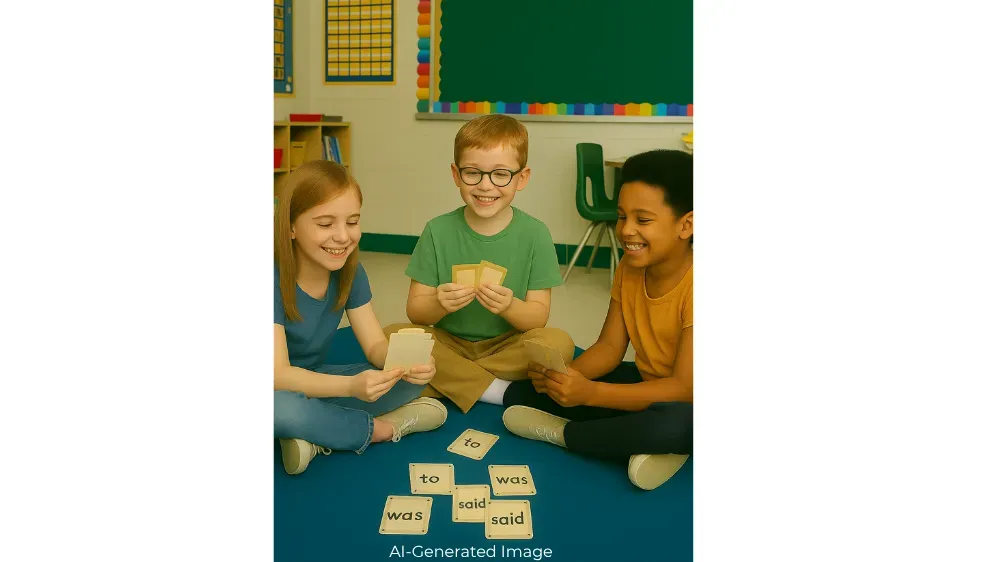
Resource(s)
Explore the resource(s) to support your implementation of this activity.
Toolkit resources help you implement high-quality instruction. To guarantee student success, these tools must be used in tandem with direct, systematic, mastery-oriented instruction and a high-quality curriculum.